How it works
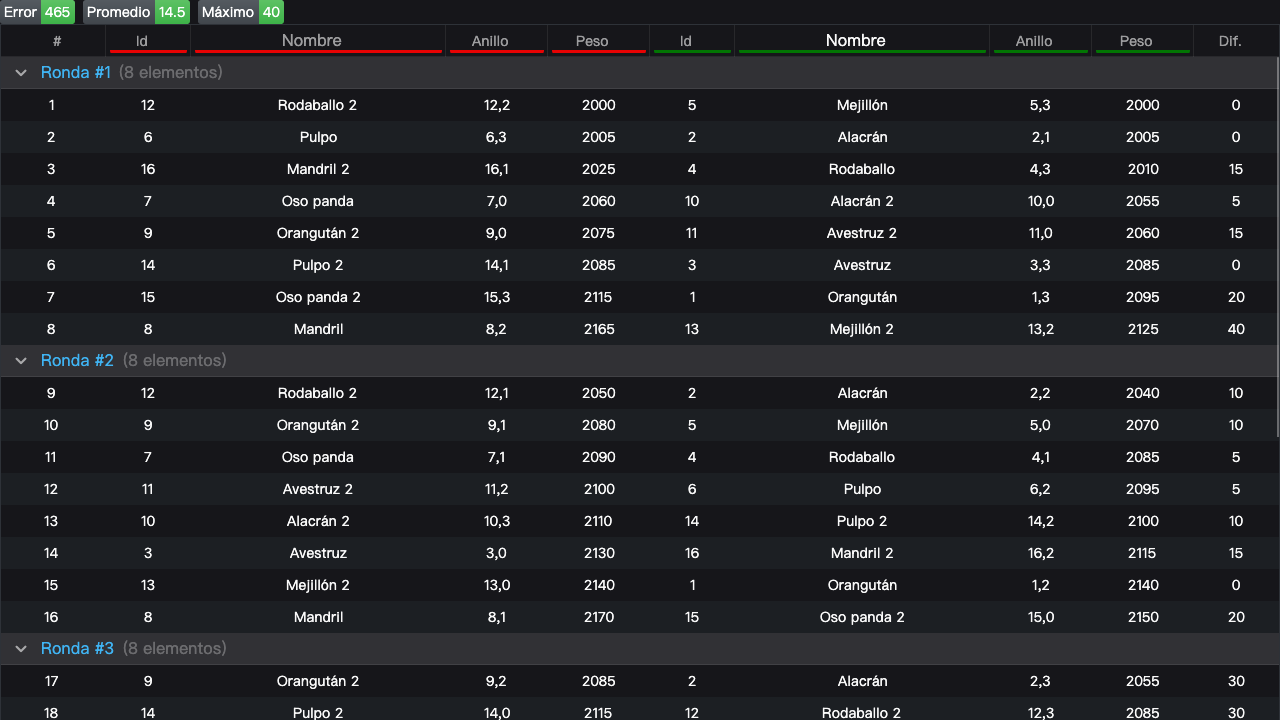
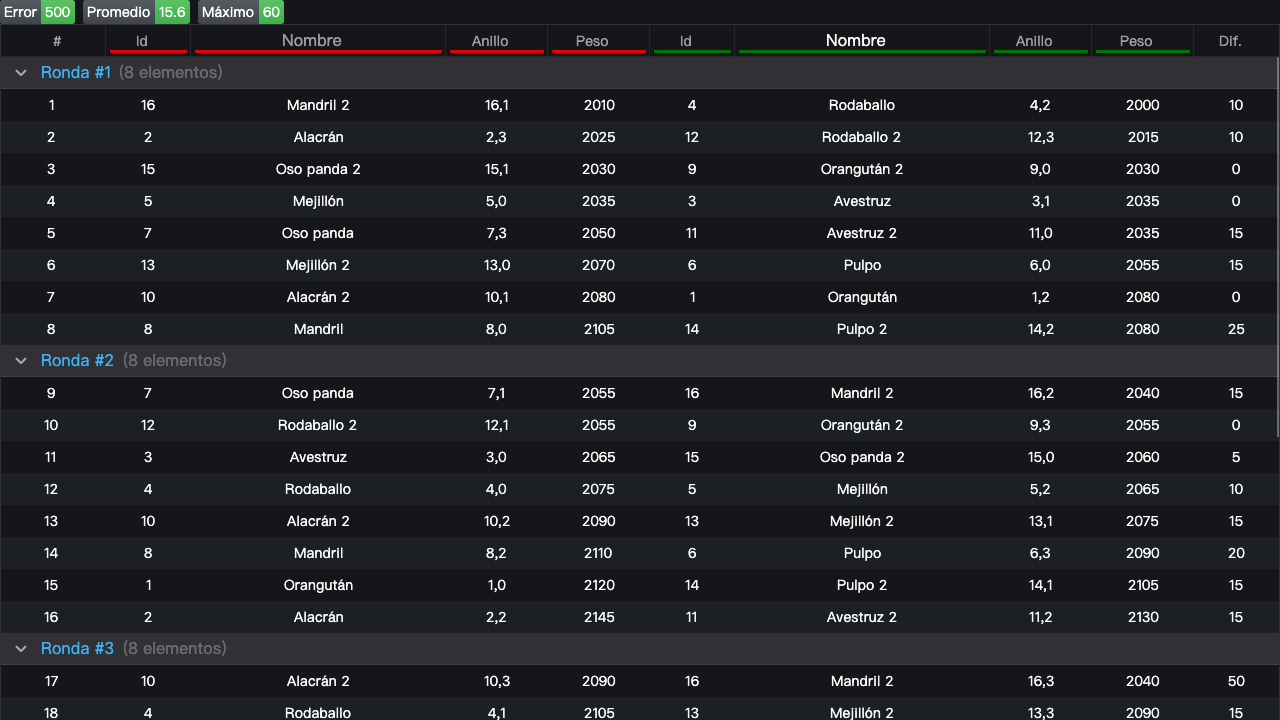
Round-based matching is Derby's primary mode. Each team registers entries with a weight in grams and the engine searches for the fight combination that minimizes the weight difference between opponents.
The number of rounds is determined by entries per team, from 1 to 4. With flexible entries, Derby can also build schedules when some teams have fewer registered entries, using the available entries without blocking the whole tournament.
- Adjustable tolerance — Set the maximum weight difference accepted between opponents
- Flexible entries — Match teams that have different numbers of registered entries
- Light/heavy priority — Choose which end of the weight spectrum to optimize first
- Unique matchups — Prevent the same pair from meeting again in later rounds or phases
Results and phase advancement
After each fight the outcome is recorded: win, loss, or tie. Derby builds a real-time scoreboard and uses it to determine which teams advance to the next matching phase.
The scoring system is configurable: define how many points a win, a tie and a loss award according to your tournament rules.
- Configurable pass points — Set the number of points required to qualify for the next phase
- Leader-based reference — Use the leading team's score as a benchmark to filter out eliminated teams
- Phase or cumulative scoring — Evaluate advancement using points from the current phase alone or the full tournament total
- Progressive elimination — Teams with no chance of winning are filtered out, reducing the overall event duration
- Partial rounds — Request fewer rounds than entries per team to shorten the tournament even further
- Chained phases — Qualifying teams automatically advance to the next matching phase
- Team filtering — Highlight the fights of a specific team or player to follow their progress through the tournament
Advantages
- Balanced and predictable rounds
- Accepts teams with different counts of registered entries
- Filters eliminated teams to reduce overall event duration
Considerations
- The exact-round constraint may slightly increase the weight difference in some fights